Chainlink Gains Cross-Chain Momentum as Mantle Retires Custom Bridge

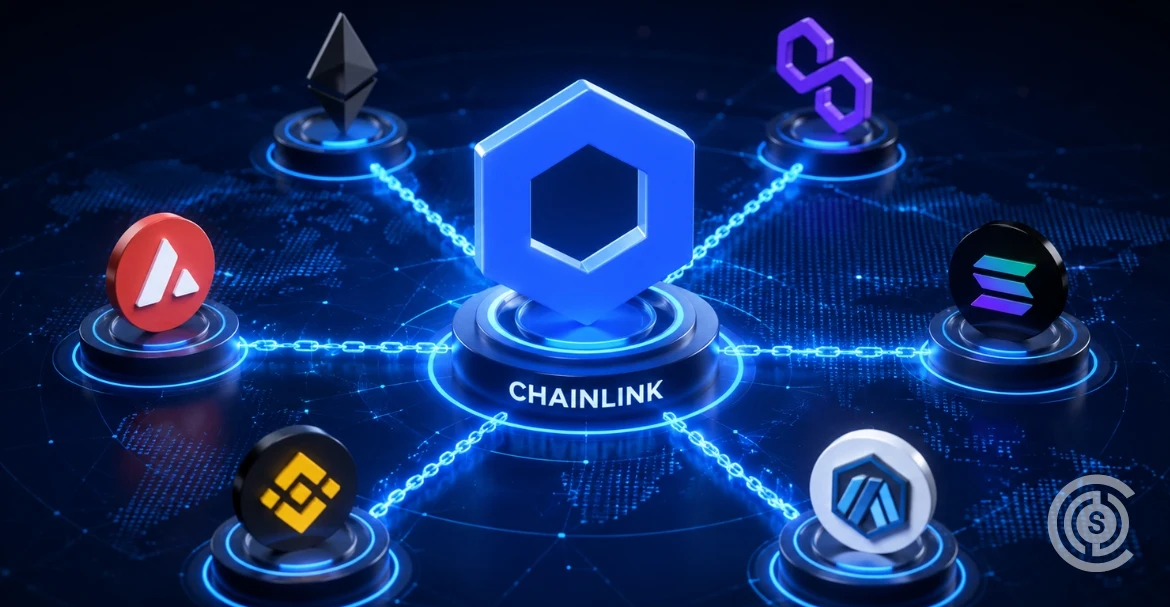
Chainlink is expanding its oracle and cross-chain infrastructure across several blockchain networks, with the Mantle network among the latest projects to change how it handles cross-chain transfers. Mantle is retiring its custom bridge and moving more than $2.5 billion in digital assets to Chainlink’s Cross-Chain Interoperability Protocol, or CCIP. The change comes as blockchain projects look for alternatives to running their own bridges and data systems.
Chainlink is also seeing its data feeds used in areas such as decentralized finance and tokenized real-world assets. That gives the company a growing role in the infrastructure behind blockchain applications, although it has not guaranteed a similar move in LINK’s price. The token recently gained 4.67% in 24 hours and reached $8.66, according to a market update.
Cross-Chain Integration Standardizes Distributed Data Validation
Mantle’s decision to retire its custom bridge is one of the more notable parts of Chainlink’s latest expansion. The network is moving more than $2.5 billion in assets onto CCIP, giving those assets access to Chainlink’s cross-chain infrastructure. Moving assets from one blockchain to another has always carried additional risks. Bridges sit between networks, making them an attractive target for attackers.
The crypto industry has seen several major bridge exploits, with some incidents resulting in hundreds of millions of dollars in losses. Mantle had its own bridge system in place, but moving to CCIP means the network no longer has to maintain that infrastructure itself. Instead, it can use a cross-chain system that Chainlink has already built and deployed across multiple networks.
CCIP is only one part of Chainlink’s infrastructure; the company also operates decentralized oracle networks that supply data to smart contracts. These feeds provide things such as cryptocurrency prices and other market information that blockchains cannot produce on their own.
That data is important for DeFi platforms. If a user’s collateral falls below a certain value, the protocol may need to liquidate the position. The decision depends on accurate price data. If that data is delayed or wrong, the protocol can end up making the wrong call.
Chainlink’s feeds are also finding a place in tokenization projects. OKX has used Chainlink data infrastructure in its work around tokenized real-world assets. That is an area worth watching because financial institutions are increasingly experimenting with putting traditional assets on blockchains. There is a practical reason projects may prefer this approach.
Building a separate oracle or bridge for every blockchain takes time and creates another piece of infrastructure that developers have to maintain. Using an existing system can make that process simpler. As more applications operate across several networks, it is becoming less of an optional feature and more of a basic requirement.
Institutional Infrastructure Activity Highlights Native Asset Market Price Movement
While backend database integrations have accelerated across public ledgers, the platform’s economic indicators present a varied outlook for network participants. There is substantial underlying developmental activity being directed by major corporate institutions, including newly established long-term coverage initiatives from multinational financial groups like Standard Chartered. This persistent backend utility suggests a sustained corporate interest in building out institutional tokenization pipelines, even during periods when broader retail market participation remains muted.
However, this systemic operational expansion has not directly resulted in immediate upward momentum for the project’s valuation metrics, as broader macroeconomic conditions and structural asset distribution schedules continue to influence global spot markets.
Following the final implementation steps of the recent cross-chain rollouts, the platform’s native asset experienced localized daily price stabilization. A financial update reported that the native token, LINK, recorded a 4.67% increase within a standard 24-hour evaluation cycle.
However, this systemic operational expansion has not directly resulted in immediate upward momentum for the project’s valuation metrics, as broader macroeconomic conditions and structural asset distribution schedules continue to influence global spot markets.
Following the final implementation steps of the recent cross-chain rollouts, the platform’s native asset experienced localized daily price stabilization. A financial update reported that the native token, LINK, recorded a 4.67% increase within a standard 24-hour evaluation cycle.
That gain came as the wider crypto market remained relatively subdued. It is difficult to say that the move was caused by the latest Chainlink integrations alone, particularly over such a short period. The longer-term picture is more interesting.
If Chainlink keeps adding networks and becomes part of the infrastructure used by DeFi platforms, exchanges, and institutions, its services could become increasingly difficult to separate from the wider blockchain ecosystem.
For now, the latest deployments show continued demand for Chainlink’s oracle and cross-chain technology. Whether that demand eventually has a bigger effect on LINK itself will depend on how quickly adoption grows and how the broader crypto market performs.