BRCA Proposal Sparks Clash Over Crypto Developer Protections

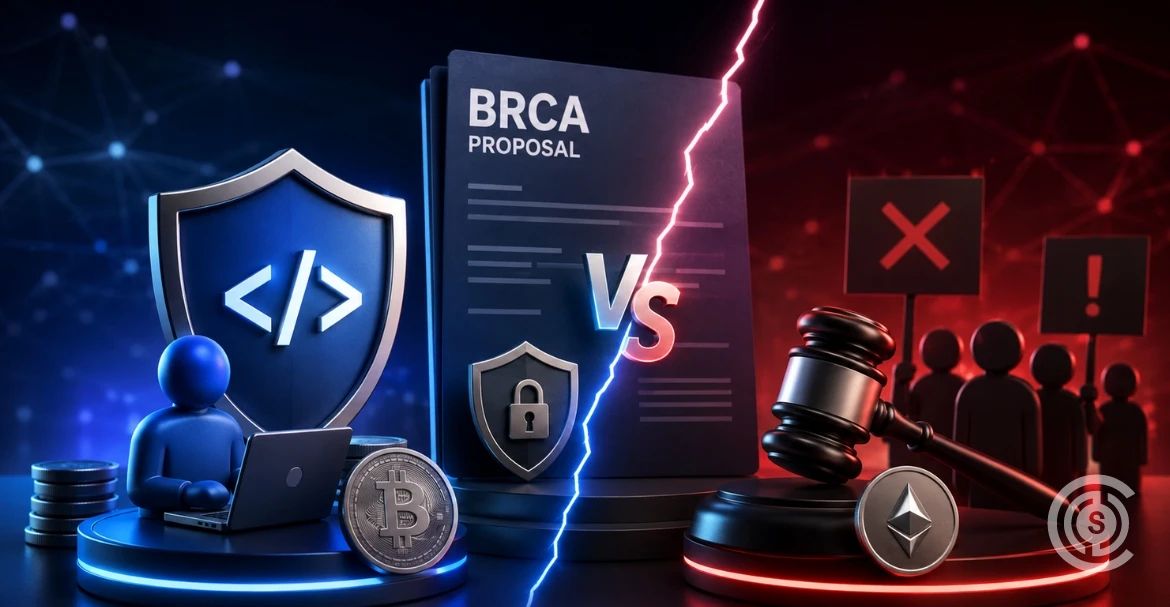
The high-stakes fight over the Digital Asset Market Clarity Act is heating up. Law enforcement groups are making an aggressive push to change how the bill protects crypto developers. At the center of this battle is the Blockchain Regulatory Certainty Act (BRCA) provision. This rule protects software engineers and infrastructure providers from being treated like financial institutions or “money transmitters”.
It ensures developers cannot be held legally responsible for how people use their open-source code, as long as they never touch or control user funds. However, regional prosecutors are trying to remove these protections. And this counter-proposal has caused disagreement in Washington, exposing a deep political divide over the bill’s safety language just as Congress tries to wrap things up before the August recess.
Last Minute Roadblock For The Clarity Act’s Rules Because of BRCA
Two prosecutor groups reportedly submitted proposed changes directly to policymakers, creating tensions within the broader law enforcement community. This has now split the law enforcement community down the middle, with the National Sheriffs’ Association being a long-time opponent of the bill refusing to sign their names to it.
This sudden roadblock threatens to undo months of hard work spent trying to build a single, fair rulebook for crypto. For a long time, the crypto world has been stuck dealing with confusing, mixed signals from different government regulators. The Clarity Act was supposed to fix that by giving everyone clear, permanent guidelines to follow. Instead, this last-minute drama from prosecutors has another issue over national security and financial laws, putting the bill’s rare bipartisan support in serious danger.
The White House and the Treasury Department both agencies aggressively denied having anything to do with the new text. Crypto Council for Innovation chief Patrick Witt bluntly stated that the prosecutors’ harsh proposal is “not even close” to what the White House actually wants. This brutal reality check shows just how chaotic and unpredictable the crypto debate has become in Washington, making it crystal clear that this latest attempt to crack down on developers is completely dead on arrival.
The Tornado Cash Problem And Why Prosecutors Fear This Unregulated Rule
At its core, prosecutors are terrified that letting crypto developers off the hook will create a massive loophole for criminals. Law enforcement argues that if software engineers have zero legal risk, nothing stops them from building automated tools specifically designed to hide dirty money and make transactions untraceable.
The biggest example they point to is Tornado Cash, a decentralized crypto “mixer.” Mixers work by taking digital assets from thousands of different people, pooling them together, shuffling them around, and spitting them back out to completely erase the original paper trail.
While the creators argue that mixers are just neutral tools meant to protect everyday privacy, global authorities say they are actively being weaponized. In fact, the U.S. government blacklisted Tornado Cash after finding out it was being used to launder massive amounts, including a significant portion of digital assets stolen by North Korea’s Lazarus Group. Even though an appeals court recently ruled that officials went too far by trying to ban the actual computer code, the developers themselves are still facing ongoing criminal trials for money laundering conspiracy.
Prosecutors are worried that this language in the BRCA will essentially legalize these kinds of mixing tools forever. They warn that if code creators are completely shielded from the law, police will be left completely powerless to stop hackers or track down ransomware networks. Ultimately, this standoff shows just how hard it is to protect basic software freedom without compromising national security.