Bitget Expands U.S. Stock Trading With Dual Access for Users

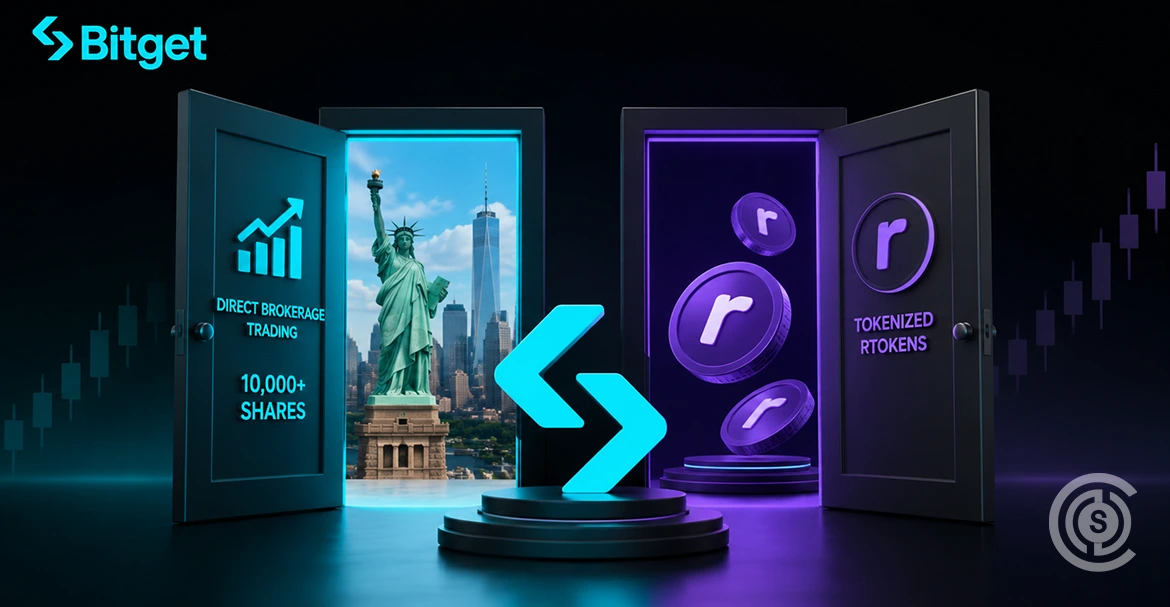
Bitget, a leading cryptocurrency exchange, announced today, June 22, 2026, that it has expanded its U.S. equities offering with a major upgrade that now gives users two distinct ways to own and trade U.S. stocks: direct brokerage access for more than 10,000 U.S.-listed stocks and ETFs, and on-chain tokenized shares (r tokens) introduced earlier this month. The move aims to bridge the gap between traditional investors and crypto-native traders by offering both conventional custody accounts and blockchain-native instruments under one roof.
Direct Trading Through Licensed Brokers
The headline feature in this update, branded Bitget US stocks 2.0, allows eligible users to trade real U.S. stocks and ETFs via licensed U.S. brokers RQD Clearing and Atomic Vaults Securities. Orders are routed to major exchanges such as Nasdaq and the NYSE, and users hold actual shares in custody, with shareholder rights like dividends and voting intact.
The major practical points include:
- There are more than 10,000 U.S. stocks and ETFs available at launch.
- Fractional-share trading down to 0.0001 shares, making high-priced names more accessible.
- Trading across pre-market, regular hours, after-hours, and overnight sessions.
- Free Level 1 real-time market data on account opening; eligible VIPs can access millisecond-level Level 2, like Nasdaq TotalView.
- Low fees starting at 0.1%, with promotional discounts up to 50% through August 31, 2026.
The exchange positions the feature as a full brokerage experience inside its app, where the portfolio transfers from other brokers, integrated market news and earnings data, and familiar U.S. stock workflows to keep veteran stock traders comfortable.
On-Chain Option Still Available
The exchange has also stressed that it is not abandoning its on-chain users. Earlier in June, the firm rolled out rTokens, tokenized representations of the U.S. stocks backed 1:1 by custody holdings via a compliant Real-World Asset (RWA) protocol called Reality. rTokens let crypto-native traders hold and use stock exposure on-chain, including using tokens as collateral for other crypto products.
The distinction, Bitget explains, is simple, where Bitget US stocks gives you direct custody of the actual share through a broker, while rTokens give you a blockchain-native token that tracks the stock’s economic performance but lives on-chain.
Two people can want the same asset, but both of these people can have very different expectations, said Bitget CEO Gracy Chen on X, illustrating why the company is keeping both rails active. With this launch, the platform is opening two doors for both types of investors, and they can then participate in a way that feels the most natural to them.
Deposits, Withdrawals, and Account Setup
For users to trade through Bitget US stocks, they must open a securities sub-account tied to their main Bitget account. Bitget will reuse the Advanced KYC info already completed on the main platform to streamline onboarding. The U.S. stocks account uses USD settlement; users can move USDC from their Bitget main account into the US Stocks sub-account to fund trades.
Bitget supports fiat-to-USDC channels (Express/Quick Buy and P2P) and allows two-way conversion between USDC and USD. Withdrawals follow a pathway: USDC from the US Stocks sub-account to the main account. Then convert it to fiat money and then withdraw it from the bank. Internal transfers are free; however, third-party payment fees may apply.
Position Transfers and Promos
Bitget says inbound transfers from traditional brokers are supported, typically taking 3-7 business days. During a launch promotion, Bitget will subsidize transfer fees if users provide proof of outbound fees charged by their original broker. New users who complete account opening, deposit, and trading tasks can also share in a promotional 200,000 USDT prize pool, the company added.
If successful, the model could help bridge the gap between traditional finance and decentralized markets and could attract new users to both ecosystems. Moreover, this will also expand the range of investment options available through a single platform.