CLARITY Act Vote in Doubt as Senate Nears August Recess

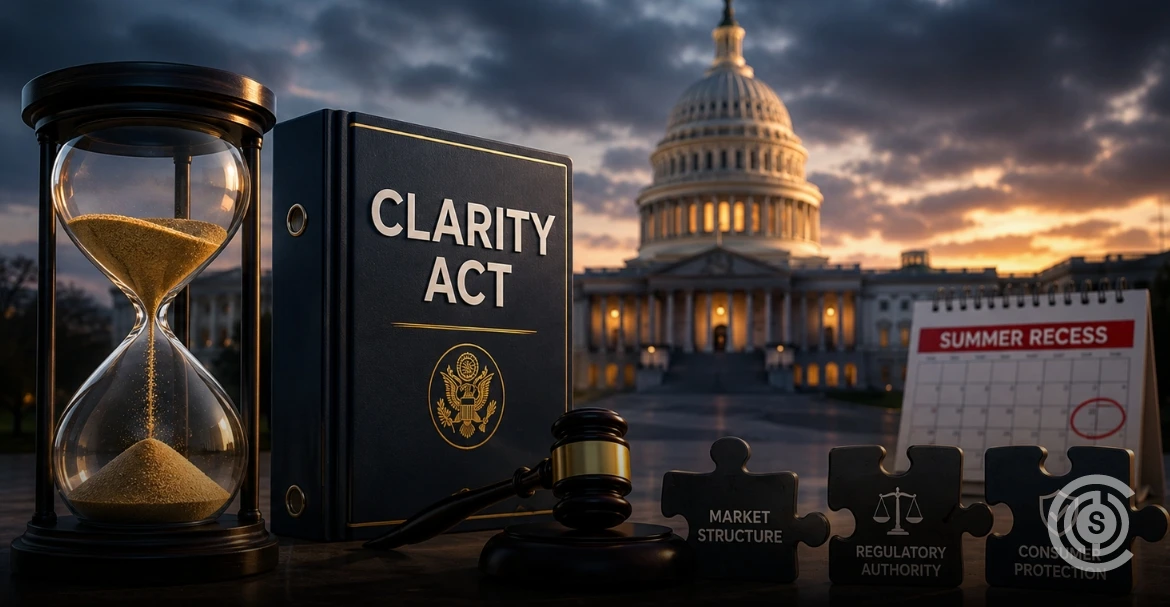
The fate of the CLARITY Act looks less certain as the U.S. Senate gets close to its summer recess and still hasn’t set a procedural vote for the crypto market structure bill. The lawmakers now have only two session days left before the break, and there’s growing doubt about whether the bill will move forward or will get pushed back by September.
The uncertainty comes as lawmakers are still working out key parts of the bill like measures on illicit finance, and limits on government officials making money from the crypto industry. However, some lawmakers still believe that there’s still hope for a vote before the recess, but analysts and industry watchers think the normal Senate process is making the timeline a lot more challenging.
Senate Runs Out of Time as Procedural Vote Remains Unscheduled
Reports suggest that the Senate has not scheduled a procedural vote for the CLARITY Act, even with the August recess around the corner. For the Senate to move forward, Majority Leader John Thune would need to file for cloture. However, no such filing had been made regarding the CLARITY Act as of Wednesday night.
The rules say a cloture motion has to remain pending for a full day before the Senate can even start a procedural vote. Failing to file, any chance of pushing forward with the legislation has dwindled, leaving many to wonder whether enough time remains before the recess.
Moreover, the Senate could stretch its session through the weekend or into next week, giving lawmakers a bit more time to work on the bill. There’s also a chance the process could speed up if the Senate agrees unanimously. Still, both of these options remain open.
Meanwhile, the Senate is handling several other priorities, which include the nomination of Todd Blanche for Attorney General, a resolution to keep the federal government funded, a Russia sanctions bill, and a college sports bill. All these items squeeze the legislative calendar even more.
If senators head out of town without acting, they could revisit the CLARITY Act when they return in September. But reports point out that only about 14 working days will be left before the Senate turns its focus to the last stretch before the 2026 midterm elections.
Ongoing Negotiations and Split Expectations Shape the Bill’s Outlook
Negotiations over parts of the CLARITY Act are still happening, even as the legislative calendar tightens. Lawmakers are still talking about how to handle illicit finance and ethics rules aimed at stopping senior officials, including President Donald Trump, from making money from the crypto sector.
The ethics language is still an unresolved issue. Senators Thom Tillis and Ruben Gallego sent a compromise proposal to the White House last week, and the administration has started to review it; any response from the White House could influence Democratic support for the bill.
Not everyone sees the bill’s chances the same way. Senator Cynthia Lummis is confident the Senate will vote on the CLARITY Act before August. She posted on X, saying she expects lawmakers to “get people on the record”, after 11 months of talks with Democrats and over 300 pages added to the bill at their request.
Others are more cautious. TD Cowen Managing Director Jaret Seiberg, who thinks the Senate could come up 10 votes short of the 60 needed to move the bill forward. He says a pre-recess vote seems unlikely, especially given expected opposition from Senator Elizabeth Warren.
Crypto commentator Crypto Rover also said passing the bill before recess is “almost impossible”. The post stated that with no CLARITY Act included in Wednesday’s cloture filings, the standard Senate process no longer allowed for a Friday vote. The remaining options: unanimous Senate consent or extending the Senate session past Friday.
While Washington waits, Russia has moved ahead with its own crypto law. President Vladimir Putin signed a law creating the country’s first legal framework for crypto trading, covering exchanges, brokers, custodians, and clearing houses.
Under the new Russian law, retail investors can buy eligible cryptocurrencies up to 300,000 rubles a year through each intermediary. Qualified investors won’t face purchase limits after they meet the requirements. Crypto exchanges will need to register and follow new capital rules. Still, cryptocurrencies won’t be allowed for domestic payments. The law takes effect on September 1, 2026.