Strategy’s Bitcoin Reserves Rise, Shares Keep Falling

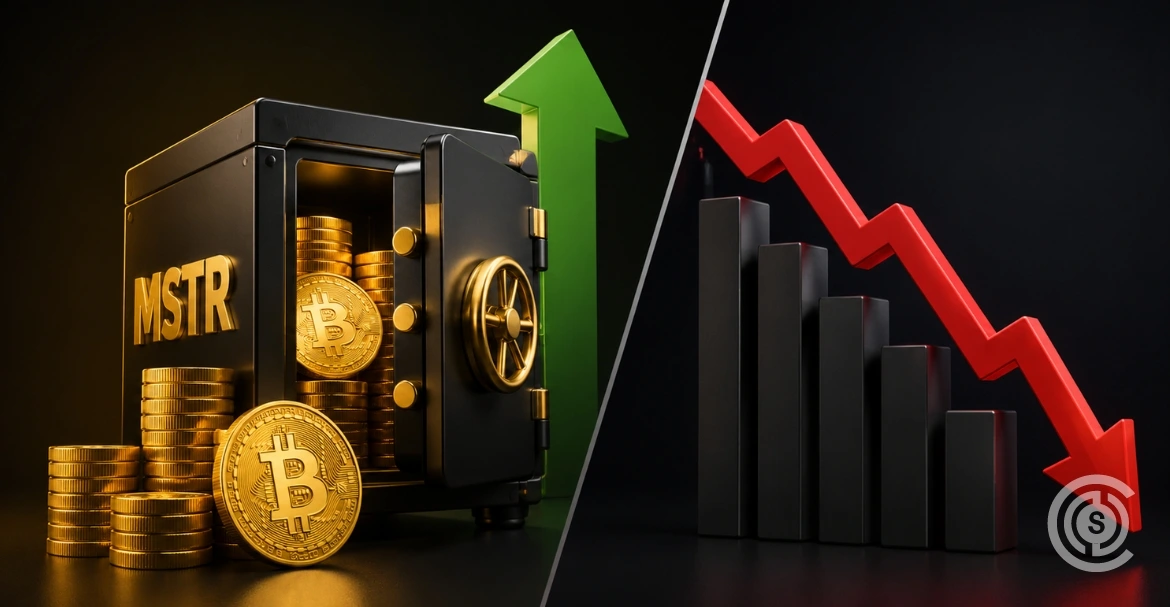
Strategy’s (formerly known as MicroStrategy) balance sheet shows a large Bitcoin position, but the investors have pushed the stock lower. The company’s Chief Executive Officer Phong Le posted on X today, July 8, 2026, that between April 6 and July 6, 2026, the company has increased its Bitcoin holdings by 10% to 843,775 BTC, and it has also grown its USD reserves by 13% to $2.55 billion, and more doubled its year-to-date BTC yield from 3.7% to 7.8%. On paper, this sounds solid, more BTC, more cash and better yield.
Why Are The Shares Falling?
Since April 6, the stock has been down roughly 25% and retail investors are furious. Some social media users accused the company of buying high and selling low, and promising high yields while borrowing against Bitcoin. The anger escalated when MicroStrategy disclosed it sold 3,588 BTC for $216 million to fund dividends on several Digital Credit Securities (STRF, STRE, STRK, STRD) and to cover the full monthly dividend for STRC in June.
However, there is a catch. Selling BTC to pay dividends is a pragmatic cash move, it funds obligations without tapping expensive debt or issuing more stock, but it clashes with the company’s long-term narrative of hoarding Bitcoin as its primary asset. This tension creates a narrative mismatch for investors: do you hold Bitcoin forever, or do you monetize it to support a dividend product? Markets don’t like mixed messages.
Then there’s the dilution gripe. Critics say MicroStrategy could grow profits the old-fashioned way, a productive business, instead of leveraging equity. In response to that chorus, a common investor demand has been a clear promise: do not sell Bitcoin unless the company is monetizing at a profit above cost basis. Without such assurance, retail holders view the firm as a speculative trader rather than a disciplined steward of BTC reserves.
Michael Saylor, founder of Strategy, also talked about a metric known as the BTC Breakeven ARR. According to this metric, the founder also argued that if Bitcoin appreciates at an annualized rate above 3.3%, the company then can support STRC dividends indefinitely from capital gains alone. The company also shared a chart suggesting even a 0% annual BTC return leaves 31 years of dividend funding, a long runway that is meant to reassure. Yet dense metrics and long-term models do not always soothe investors who see immediate share price pain and headline-grabbing BTC sales.
Market mechanics add another layer. Strategy’s shares do not always move in lockstep with Bitcoin because they are also influenced by corporate actions, dividend products, and leverage. When the firm sells part of its BTC reserve, even for legitimate reasons, traders react to potential future dilution, higher financing costs, or signaling that management needs cash. Short sellers and algorithmic traders can amplify price moves, turning a modest sell into a large drop.
For investors who have invested into MSRT, the situation is stressful but on the brighter side, the company still holds a giant stack of Bitcoin and sizable cash reserve, but selling BTC to fund dividends blurs their strategy and stokes fears. Saylor’s long-term math may be persuasive to some, but investors remain focused on current risks and market sentiment.
What To Watch Next?
What comes next is to see whether Strategy sets a clearer policy for Bitcoin sales and dividend funding or not. The company’s latest BTC sale to cover preferred dividends has sharpened investor focus on how often reserves may be monetized, and that uncertainty is likely to keep the stock volatile.